
What Shopping Centers and Hotels Across Arkansas and North Texas Are Doing Differently This Holiday Season
Most holiday planning advice is written for one kind of buyer. It assumes there is a company, a guest list, a room booked for a Friday night in December, and a group of employees who need a reason to enjoy the evening. That advice is useful, and we have written plenty of it ourselves.
But it is not the conversation we are having with shopping centers, hotels and resorts.
When a retail center or a hospitality venue plans a holiday activation, almost nothing about the brief is the same. There is no guest list, because the audience is whoever walks through the doors. There is no start time, because the activation runs for six weeks rather than four hours. And there is no single moment of success, because the result is measured in traffic, in time spent on site, in tenant sales and in how much of the season ends up on social media with the venue’s name attached to it.
Different objectives call for a different kind of experience. Over the past year we have spent a lot of time working through that difference with venues across Arkansas and North Texas, and a few patterns have become hard to ignore.
The season is being measured, not just decorated
For a long time, holiday programming in retail and hospitality was treated as atmosphere. Lights went up, a tree went in the atrium, a photo set appeared near the food court, and the season was considered handled.
That has changed, and the reason is straightforward. Marketing budgets in both sectors are under more scrutiny than they were five years ago, and holiday spend is a large line item that arrives at the same time every year. When a general manager or marketing director signs off on a seasonal program now, they are usually being asked what it returns.
The questions we hear most often are practical ones. How many people will this bring in on a weekday afternoon rather than a Saturday? How long does the average visitor stay once they engage with it? Can tenants sponsor it or tie promotions to it? How many opt-in contacts does it generate for the venue’s own database? What does it produce that we can use in next year’s campaign?
Decoration cannot answer any of those questions. An experience can answer all of them.
Why the traditional holiday photo set stopped carrying the season
There is nothing wrong with a Santa set. In many centers it remains the single strongest traffic driver of the year, and we would never suggest removing something that works.
The problem is that it does one job for one audience. It serves families with young children, once per season, usually on a weekend, and often through a queue long enough that the experience becomes an act of patience. Teenagers do not join it. Adults without children do not join it. Business travelers in a hotel lobby have no reason to look at it. And once a family has done it, they have no reason to come back and do it again in the same year.
For a venue that needs to fill eight weeks of trading, that is a narrow return. The venues that are pulling ahead this year are the ones adding something alongside it: a second experience with a wider audience, a shorter cycle time and a reason to repeat.
What a participation-led activation looks like in a concourse or a lobby
Our 2026 Holiday Experience Collection was built around participation rather than observation, and each of the four concepts behaves differently in a public space. That difference matters more in retail and hospitality than anywhere else, because the venue is choosing based on throughput and audience rather than on theme alone.
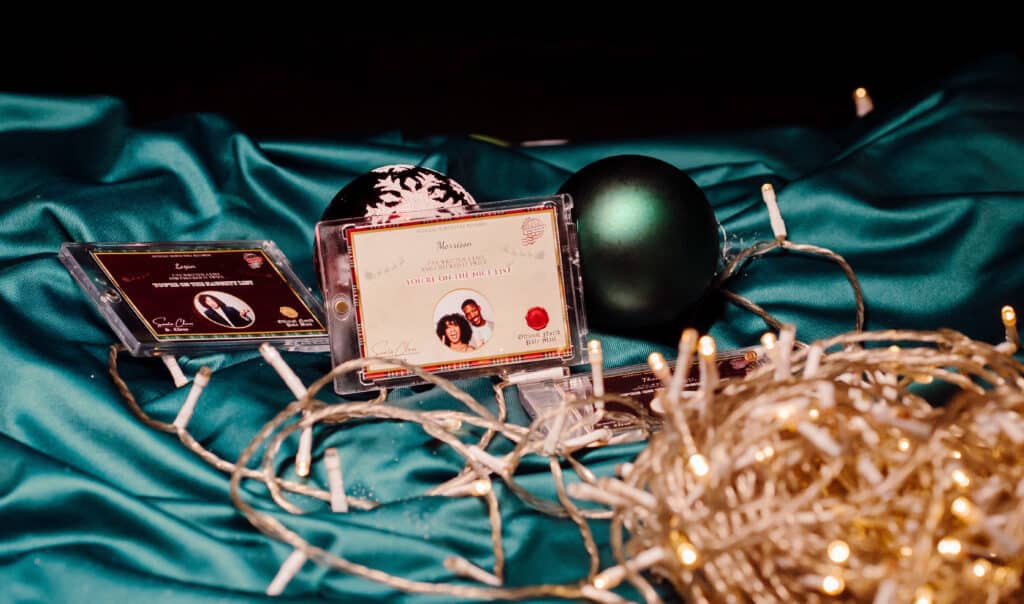
The Naughty & Nice Card works in a concourse the way trading cards have always worked, which is socially. Guests receive a personalized card featuring their own image and a set of custom holiday ratings, and the first thing almost everyone does is turn to the person next to them and compare. Cycle time is short, the appeal runs from children through to groups of teenagers and adults, and because every card is different, the same visitor has a reason to come back and get another one on their next trip. For centers that need repeat engagement across a long trading period rather than a single peak weekend, that repeatability is the whole point.
The Gift puts the guest in charge of building their own image, selecting and customizing elements rather than standing still and waiting for a countdown. In hospitality settings this tends to hold attention longer, which is useful in a lobby, a resort common area or an event space where dwell time itself is the objective. It also produces a result that feels personal enough that guests actually keep it.
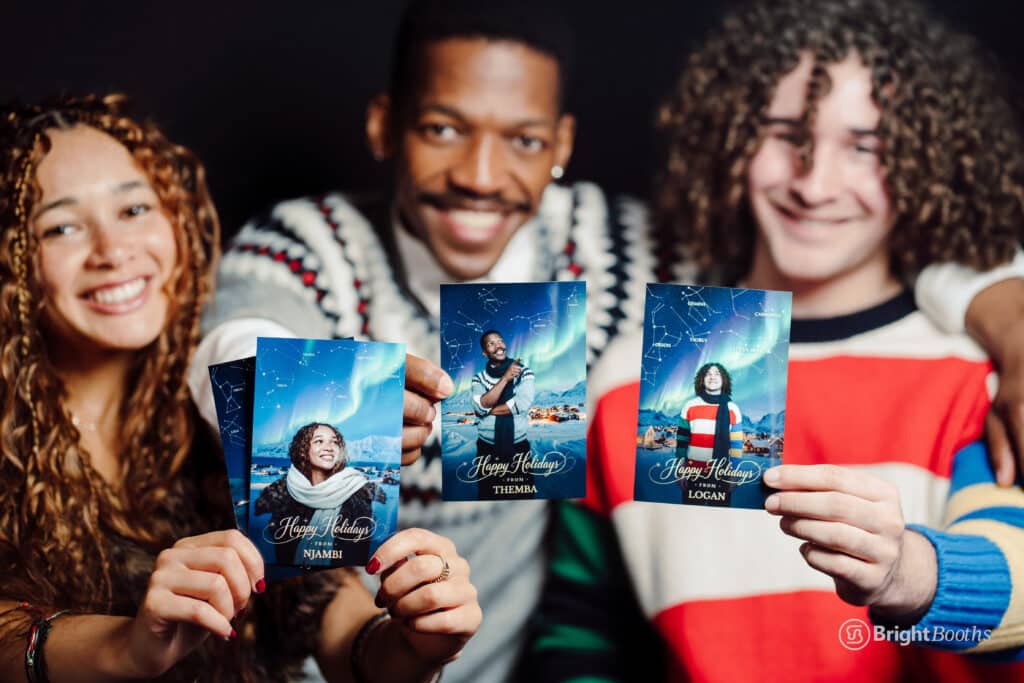
Holiday Constellation is the anchor. It creates a cinematic environment built from light and seasonal atmosphere, and guests step inside it rather than stand in front of it. In practice it does two things for a venue. It gives the season a visual centerpiece that photographs well enough to carry the entire marketing campaign, and it gives visitors a specific reason to make the trip, which is the harder and more valuable of the two. Luxury hotels, resorts and flagship retail centers are the venues asking for it most.
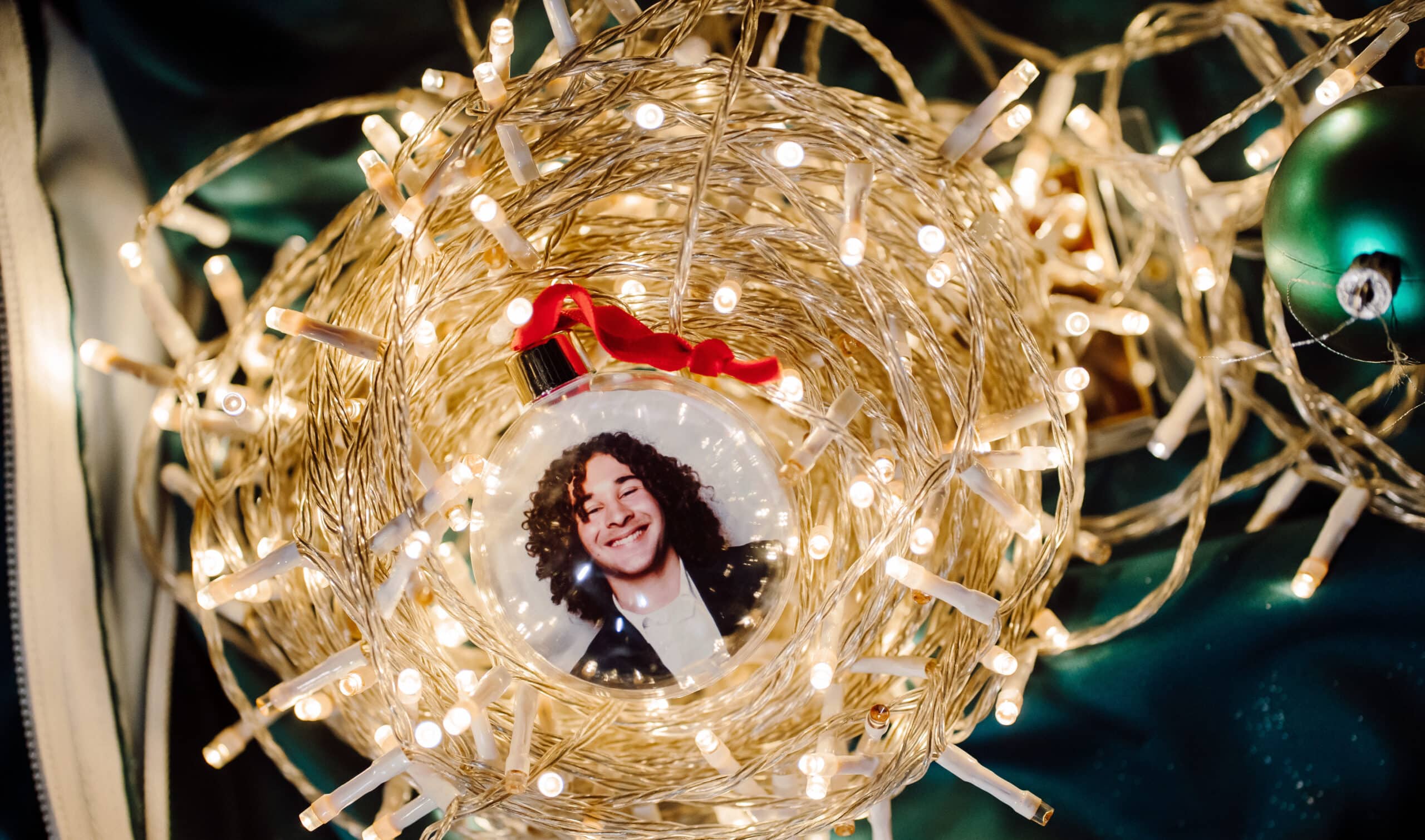
The Holiday Bauble is the quiet one, and in retail it may be the most strategically interesting. Guests create a personalized ornament carrying their own image, and unlike most promotional items it does not get thrown away in January. It goes into a box, comes out the following December and goes on the tree, which means a venue’s holiday activation from this year is physically present in a family’s home a year later. Very little seasonal marketing spend can claim that.
The part that turns an activation into a campaign
A well-chosen experience draws people in. What happens around it is what makes the budget defensible.
Every one of these experiences can carry venue branding on the printed and digital output, which means the visitor leaves holding a branded asset and shares a branded image. That is a meaningful amount of organic reach for a venue that would otherwise be paying for impressions during the most expensive advertising weeks of the year.
Digital delivery is where the retail case gets stronger still. When a guest chooses to receive their card, image or ornament preview by email or text, the venue gains an opt-in contact at the exact moment the guest is enjoying themselves, which is a far better acquisition point than a form on a website. Those contacts are still there in February when the center is trying to promote something with no seasonal tailwind behind it.
Tenant and sponsor participation is the third piece. A holiday experience positioned near an anchor store, co-branded with a tenant, or tied to a spend-and-redeem promotion turns a marketing cost into a shared cost, and gives the leasing team something concrete to offer. Several centers we work with now build the sponsorship conversation into the planning stage rather than treating it as an afterthought.
Practical planning notes for a long-run installation
A six week installation is a different operational problem from a four hour party, and it is worth being direct about what it requires.
Space and power need to be confirmed early, particularly for an immersive setup like Holiday Constellation, which needs a defined footprint and controlled sightlines to work properly. Queue management matters more than most venues expect, because an activation that creates a bottleneck in a walkway will make enemies of the tenants on either side of it. Staffing needs to be planned around the venue’s actual traffic curve rather than a flat schedule, since the difference between a Tuesday morning and the Saturday before Christmas is enormous. And the content plan should be agreed before the installation opens, so the venue’s marketing team is capturing and publishing throughout the season rather than realizing in January that nobody documented it.
None of this is difficult. It just needs to be decided in advance, which is the real argument for planning a retail or hospitality holiday program well before the corporate party market starts filling calendars.
Where the season stands now
Corporate holiday dates for 2026 are already being secured across Arkansas and North Texas, and retail and hospitality installations run longer and require more setup than a single evening event, so they need to be locked in earlier rather than later. Venues finalizing their seasonal programs now still have the full range of concepts and installation dates available to them.
The venues seeing the strongest results are not the ones spending the most on decoration. They are the ones treating the holidays as a period when their audience is already present, already in a good mood and already holding a phone, and building something worth participating in while all three of those things are true.
Ready to plan your 2026 holiday activation?
BrightBooths designs and delivers holiday experiences for shopping centers, hotels, resorts and brand activations across Arkansas and North Texas.
Frequently asked questions
How long can an installation run? Seasonal installations are typically booked for multi-week periods running from mid November through early January, and can be staffed for full trading hours or specific peak periods depending on the venue’s traffic pattern.
Can the experience be branded for our venue or a sponsor? Yes. Printed and digital output can carry venue branding, tenant co-branding or sponsor artwork, and the experience itself can be themed to match an existing seasonal campaign.
How much space is needed? It depends on the concept. Card and ornament experiences work in a compact footprint suitable for a concourse or lobby, while an immersive environment such as Holiday Constellation needs a larger defined area with controlled sightlines.
Do guests receive something physical? With the Naughty & Nice Card and the Holiday Bauble, yes. Both are designed as keepsakes guests take home, with digital versions delivered alongside them for sharing.
When should we book? As early as possible. Multi-week installations require more planning and equipment allocation than single evening events, and preferred dates are usually committed well before the corporate party season peaks.